
Our Blogs
Explore articles, tips, and strategies to help you make confident money decisions at every stage of life.

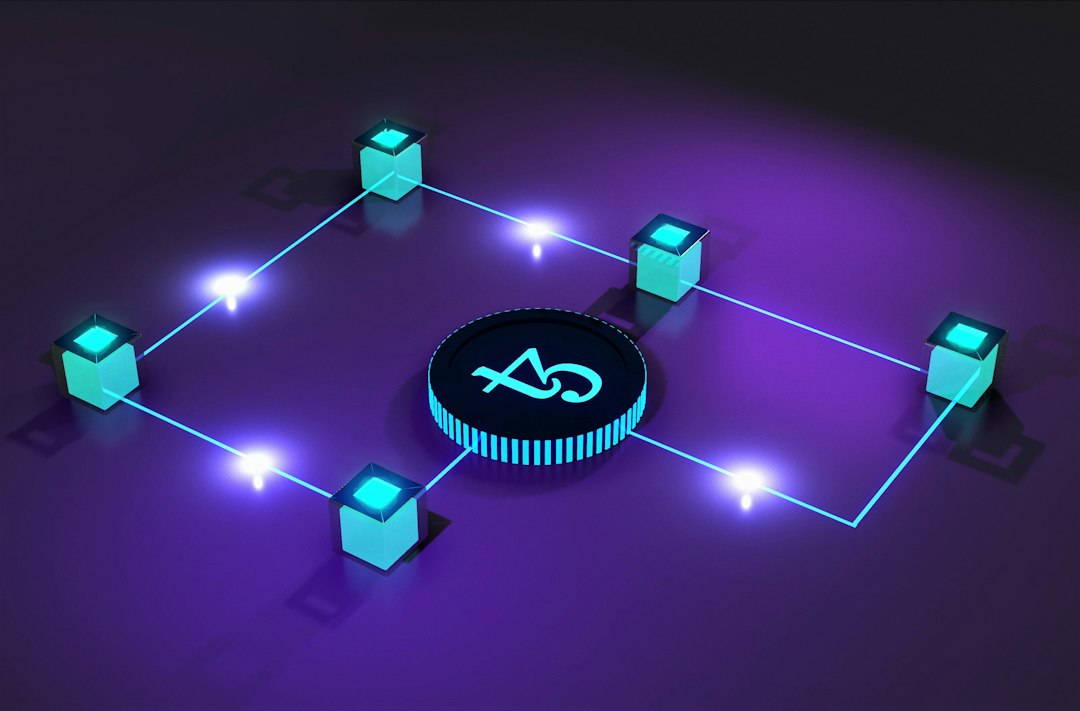
The Circle Processing Blueprint: Building High-Velocity Transacting Structures
The Circle Processing Blueprint: Building High-Velocity Transacting Structures
The Hidden Costs of Lag: Why Speed Defines Your Success
The impact of a slow or unreliable payment system extends far beyond a few lost sales. Each moment of latency, every timeout experienced by a customer, erodes confidence in your brand. In today's hyper-competitive market, consumers have zero tolerance for friction at checkout. They'll simply take their business elsewhere, often to a competitor whose payment process is seamless and swift. Think about the compounding effect: lost revenue from abandoned carts, increased customer service inquiries dealing with failed transactions, and the intangible damage to your reputation. A suboptimal payment architecture doesn't just cost you money; it costs you future opportunities. This is why investing in a **high-performance payment architecture** isn't a luxury; it's a foundational element for survival and prosperity in the digital economy. We need systems that are not just functional but inherently agile and resilient, capable of handling immense loads without breaking a sweat.Engineering Resilience: Core Components of a High-Performance Payment Architecture
Building a payment architecture that can consistently deliver speed and reliability requires a strategic approach, focusing on several critical components working in harmony. This isn't about slapping on a quick fix; it's about designing a system from the ground up for maximum efficiency. Here are the pillars we focus on: 1. **Distributed Infrastructure:** Spreading your payment processing infrastructure across multiple data centers and cloud regions ensures redundancy and reduces the physical distance data has to travel. This minimizes latency and provides failover capabilities if one region experiences an issue. 2. **Intelligent Load Balancing:** During traffic surges, smart load balancers distribute incoming transaction requests efficiently across available servers and payment gateways. This prevents any single point from becoming overwhelmed, maintaining consistent processing speeds. 3. **Optimized API Gateways:** Your API integrations with payment processors must be lean, fast, and secure. Every millisecond saved in an API call adds up, especially when processing thousands of transactions per second. 4. **Real-Time Fraud Detection:** Integrating fraud detection mechanisms that can analyze transactions in milliseconds, without adding noticeable delay, is crucial. Legacy systems often introduce latency here, but modern solutions are designed for near real-time assessment. 5. **Payment Orchestration Layer:** This is where the magic of `zero-latency transaction routing` truly comes into play. An orchestration layer acts as a central nervous system, intelligently routing each transaction to the optimal payment gateway or processor based on factors like cost, approval rates, regional availability, and real-time performance. It dynamically adapts, ensuring transactions always take the fastest, most reliable path. By focusing on these elements, we construct a system that is not only fast but also incredibly robust and adaptable to varying conditions and traffic demands.Scaling for Success: Tailoring an Enterprise Merchant Platform
For larger businesses, the stakes are even higher. An **enterprise merchant platform** isn't just about processing more transactions; it’s about managing complexity, ensuring global reach, and integrating seamlessly with a vast ecosystem of existing business systems. These platforms demand a bespoke approach, designed to handle immense scale, diverse payment methods, and stringent security requirements. When we talk about an enterprise-grade platform, we’re looking at solutions that offer: * **Global Reach and Localization:** Supporting multiple currencies, payment methods, and local compliance requirements across different geographies. * **Advanced Analytics and Reporting:** Providing deep insights into transaction data, approval rates, fraud patterns, and operational performance to inform strategic decisions. * **Customization and Flexibility:** The ability to tailor workflows, integrate with ERPs, CRMs, and inventory systems, and adapt to evolving business needs without extensive re-engineering. * **Robust Security and Compliance:** Adherence to PCI DSS, GDPR, CCPA, and other regulatory standards is non-negotiable, requiring sophisticated encryption, tokenization, and fraud prevention tools. A well-designed **enterprise merchant platform** acts as a central hub, orchestrating every aspect of the payment lifecycle and ensuring that even at the highest volumes, every transaction is handled with precision and speed, driving significant business value.Achieving Zero-Latency: Strategies for Real-Time Transaction Routing
The concept of `zero-latency transaction routing` might sound ambitious, but with the right architectural decisions, we can achieve near real-time processing speeds that drastically improve conversion rates and customer satisfaction. It's about eliminating every unnecessary delay in the payment path. Here’s how we approach it: * **Direct Integrations:** Wherever possible, establishing direct API connections with primary payment processors and acquiring banks bypasses intermediaries, reducing hops and processing time. * **Proximity Routing:** Geographically routing transactions to the nearest data center and payment gateway minimizes network travel time. This is especially critical for global operations. * **Performance Monitoring and Dynamic Routing:** Constantly monitoring the performance and uptime of various payment gateways and processors in real time. If one gateway is experiencing elevated latency or downtime, the system automatically routes transactions to an alternative, high-performing option. * **Caching and Tokenization:** Caching non-sensitive data and using tokenization for sensitive card details reduces the amount of information that needs to be transmitted and processed for each transaction, speeding up the flow without compromising security. Implementing these strategies transforms your payment process from a potential bottleneck into a powerful competitive advantage, ensuring that your customers enjoy a fluid, instant checkout experience, no matter the traffic load.Frequently Asked Questions About High-Performance Payment Architecture
Q: What is payment orchestration, and why is it crucial for enterprises?
Payment orchestration refers to a technological layer that sits between your merchant system and various payment processors, gateways, and fraud tools. For enterprises, it's crucial because it intelligently routes transactions to the optimal provider based on real-time data like approval rates, cost, and regional availability. This significantly boosts approval rates, reduces processing fees, enhances redundancy, and is a cornerstone of a truly high-performance payment architecture.
Q: How can I prevent payment gateway timeouts during peak sales?
To prevent timeouts during peak sales, you need a multi-faceted approach. This includes implementing robust load balancing across your payment infrastructure, ensuring your payment gateways are geographically distributed for proximity routing, and optimizing API calls for efficiency. Partnering with a payment provider or orchestrator that offers zero-latency transaction routing and has proven scalability for an enterprise merchant platform is also essential to manage high concurrency effectively.
Q: Can a modern payment architecture really eliminate checkout latency?
While "eliminating" all latency is practically impossible given network and processing realities, a modern, well-designed payment architecture can reduce it to near-zero levels – often just a few hundred milliseconds or less. This is achieved through direct integrations, intelligent zero-latency transaction routing, distributed infrastructure, caching, and optimizing every step of the payment flow. The goal is to make the payment process feel instantaneous to the end-user.
Q: What role does AI play in improving payment processing speed and reliability?
AI and machine learning are increasingly vital in modern payment architectures. They are used for advanced fraud detection, which can analyze transactions in milliseconds without manual intervention. AI also optimizes routing decisions by continuously learning which payment routes and processors offer the best performance and approval rates in real-time. This predictive intelligence contributes significantly to maintaining a high-performance payment architecture and proactive issue resolution.
Conclusion: Building for Tomorrow's Commerce Today
In today’s fast-paced digital landscape, a seamless payment experience is not just an expectation, it’s a non-negotiable demand. Merchants who fail to address systemic checkout latency and network timeouts during concurrent traffic spikes will inevitably fall behind. By embracing a **high-performance payment architecture**, utilizing principles of **zero-latency transaction routing**, and leveraging a robust **enterprise merchant platform**, you're not just solving a pain point; you're building a competitive advantage. It's time to stop losing customers to a sluggish checkout. I encourage you to evaluate your current payment infrastructure. Are you ready to future-proof your business and deliver the lightning-fast, reliable transactions your customers expect? Reach out to an expert today to discuss how you can implement a payment architecture designed for unparalleled velocity and resilience.
Why Circle Processing?
Frequently Asked Questions
Clear answers to help you make confident financial decisions.
Q: What is the main difference between Dual Pricing, Cash Discount, and Surcharging?
The main difference is how the price is presented to the customer. Dual Pricing shows two prices upfront (e.g., $10 cash / $10.40 card). A Cash Discount shows one higher price and automatically applies a discount if the customer pays with cash. Surcharging shows one price and adds a fee at the end only for credit card transactions. Our experts can help you choose the best fit for your business.
Q: Are these fee-elimination programs legal?
Yes. Cash Discount and Dual Pricing programs are legal in all 50 states when implemented correctly with transparent signage, which we provide. Credit card surcharging is also legal in most states, but is prohibited in a few, such as Connecticut and Massachusetts. We are compliance experts and will ensure your business always operates within the rules.
Q: Which Clover device is right for my business?
It depends on your needs. The Clover Station Duo is perfect for high-volume countertops with its dual screens. The Clover Flex is a powerful handheld device ideal for restaurants and mobile payments. The Clover Mini is a compact, all-in-one solution for smaller spaces. We can help you select the perfect hardware during your free consultation.
Q: What makes Circle Processing different from other Clover resellers?
Our focus is on being your profitability partner, not just a hardware vendor. Our core expertise is in the complex, compliant implementation of fee-elimination programs. We combine that with transparent pricing, no long-term contracts, and dedicated, 24/7 U.S.-based support to help your business thrive.

Get Started
Want to work with us?
Let’s create a personalized financial plan that puts your goals within reach — starting today.
COMPANY
LEGAL
SOCIALS
Copyright 2026. Circle Processing. All Rights Reserved.