Our Blogs
Explore articles, tips, and strategies to help you make confident money decisions at every stage of life.

Contactless 2.0: Why Customers Spend More with Digital Wallets | Circle Processing
If I am a merchant in New York City, it is easy to look at Apple Pay or Google Pay and think only about one question: “Are these wallet payments going to cost me more?”
That is a fair concern, but it is usually the wrong place to stop. In most cases, accepting Apple Pay does not come with an extra Apple Pay-specific processing fee on top of normal card processing; Stripe’s Apple Pay documentation says there are no additional fees to process Apple Pay and that pricing is the same as for other card transactions. Apple also says it does not charge users fees for paying with Apple Pay, and that Apple Pay works anywhere contactless payments are accepted.
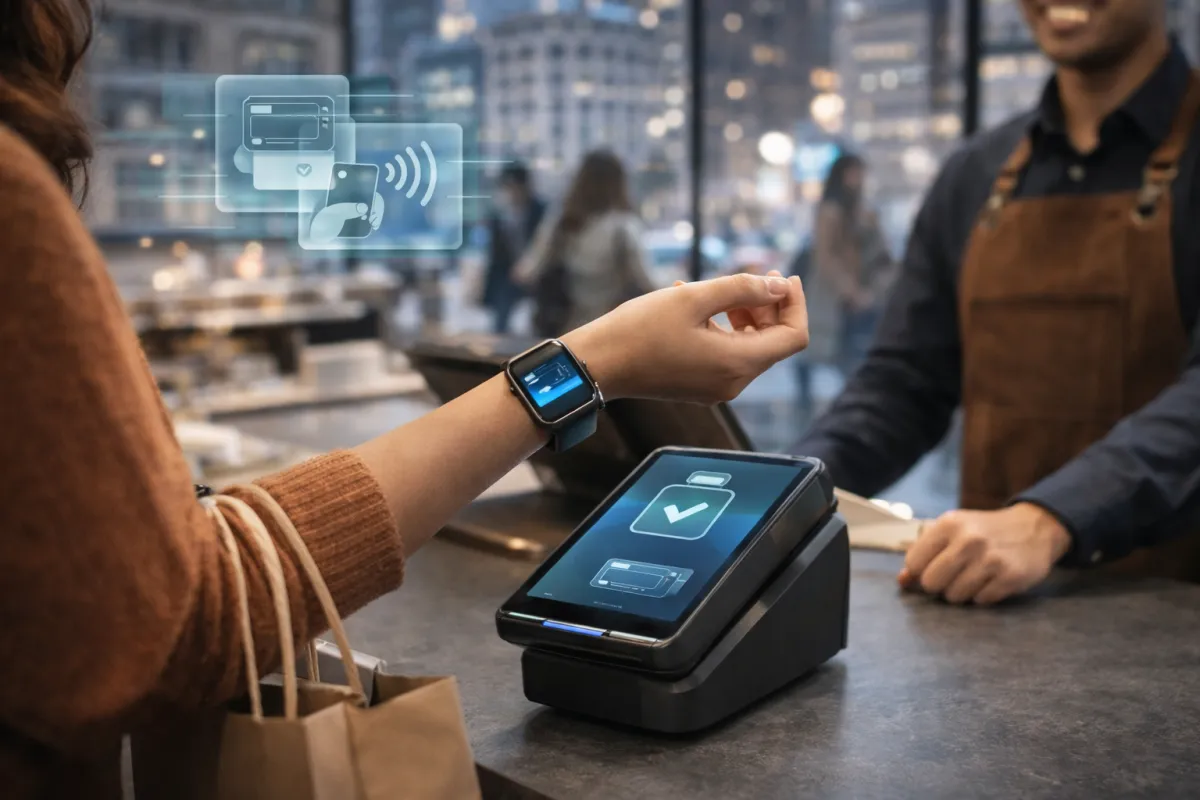
From my perspective, the bigger business question is this: What happens to customer behavior when paying becomes faster, easier, and more frictionless? That is where digital wallets start becoming more interesting. Circle Processing’s own content argues that modern NFC terminals and Apple Pay for Business can process transactions much faster than traditional methods and can increase throughput during peak hours.
And that is exactly why Digital Wallet NYC acceptance is not just a tech upgrade. It is a sales psychology issue.
Why Payment Friction Matters More Than Merchants Think?
A lot of merchants focus on product, price, staff, and marketing, but underestimate the final few seconds of the sale.
That payment moment matters because the harder it feels to complete a purchase, the more likely a customer is to pause, hesitate, abandon, or reduce what they buy. Digital wallets reduce that friction. Apple describes Apple Pay as simple, easy to use in stores, and accepted at over 85 percent of retailers in the U.S., while Circle Processing positions digital wallets and tap-to-pay as part of a modern checkout experience for NYC businesses.
When the act of paying feels almost effortless, customers are more likely to complete the transaction without overthinking it. That does not mean every wallet user suddenly spends irrationally. It means the checkout process gets out of the way of the purchase decision.
The Real Psychology: Friction Down, Spending Confidence Up
This is the part many merchants feel in practice even before they can explain it.
When a customer pays with a physical wallet, they often go through a small series of micro-frictions:
reaching for the wallet
choosing a card
inserting or swiping
waiting
re-handling the card
mentally feeling the payment event as more tangible
With a digital wallet, especially on a phone already in hand, that process feels lighter and faster. Apple Pay’s own consumer messaging emphasizes speed, convenience, and reduced physical contact at checkout.
Psychologically, a smoother checkout can reduce interruptions in the buying flow. The customer stays in “yes” mode instead of shifting into a more effortful evaluation moment.
Do Digital Wallets Actually Encourage Impulse Buying?
There is evidence that they can influence impulse behavior, but it is important to say this carefully.
A 2022 peer-reviewed study on e-wallet usage found that perceived enjoyment of using an e-wallet positively affected impulse buying, meaning that when the payment experience felt enjoyable, pleasant, and smooth, users were more likely to feel unplanned purchase desire.
That does not mean every digital wallet transaction is bigger than every card transaction. It does mean the payment experience itself can make spontaneous buying more likely for some customers. In merchant terms, that supports the idea that tap-to-pay benefits go beyond convenience alone.
The “Tap Effect” Is Often About Volume, Not Just Ticket Size
Here is where merchants sometimes oversimplify.
The value of digital wallets is not always that every single transaction becomes larger. In fact, a 2024 field experiment on mobile payments found that introducing mobile payment decreased the average amount per transaction but increased overall sales by boosting the number of transactions, especially when expected payment wait times were longer.
That is a huge insight for merchants.
If digital wallets help more customers buy, buy faster, and avoid dropping off during checkout friction, then overall revenue can rise even if the average basket does not jump in every context. For fast-paced NYC businesses, that can be more valuable than focusing only on the per-ticket amount.
Why Faster Checkout Changes Spending Behavior?
Circle Processing’s own article makes this point in a very merchant-friendly way: faster digital-wallet and NFC transactions can increase throughput in peak periods, which means more transactions can be completed in the same window.
That matters because time pressure changes customer behavior.
In a coffee shop, quick-service restaurant, convenience store, bar, salon, or other fast-moving business, customers often make “good enough” decisions. If the line moves quickly and the payment step feels effortless, they are more likely to:
add an extra item
say yes to a small upsell
complete a purchase they might otherwise delay
avoid abandoning the purchase during a busy rush
That is why I see Apple Pay for Business and wallet acceptance as conversion tools, not just payment options.
Why Merchants Fear Wallet Fees in the First Place?
The concern usually comes from misunderstanding how the wallet sits inside the payment stack.
Many merchants hear “Apple Pay” or “Google Pay” and assume it works like an entirely separate, premium-cost payment rail. But in most setups, the underlying transaction is still tied to the customer’s card credentials and processed through the merchant’s normal processing relationship. Stripe’s Apple Pay documentation explicitly says there are no additional Apple Pay processing fees and pricing is the same as other card transactions.
So the question should not usually be, “Is Apple Pay charging me extra?” It should be, “Am I making enough additional sales and improving customer flow enough that contactless acceptance becomes a net positive?” For many merchants, the answer is yes.
Why Digital Wallets Feel Easier to Spend With?
There is also a behavioral reason wallets can feel looser than traditional cards.
Wallet payments:
remove physical cash cues
reduce the tactile sense of “spending”
shorten the pause between wanting and buying
fit naturally into the devices customers already use throughout the day
Apple’s own consumer messaging highlights that Apple Pay works right from the device, avoids handling cards or terminals, and is designed to be simple, secure, and private.
That ease can make small yes-decisions happen faster. For merchants, that is often where the upside lives: not necessarily in one dramatic high-ticket wallet sale, but in the accumulation of more completed transactions and smoother purchase flow.
Security and Trust Also Affect Spending
Customers spend more easily when they trust the payment method.
Apple says Apple Pay uses a device-specific number and unique transaction code, does not share the actual card number with merchants in-store, and requires Face ID, Touch ID, or passcode authorization.
That security story matters psychologically. When a customer feels the method is safe and familiar, hesitation tends to drop. In many cases, trust plus convenience is what makes the wallet feel natural enough to use repeatedly.
For merchants, that means Digital Wallet NYC acceptance is not just about keeping up with consumer tech. It is about aligning with payment methods customers already trust.
The NYC Angle: Speed Matters More in Dense, High-Volume Environments
This point is especially important in New York City.
In a market where lines are common, lunch windows are short, and customer patience can be limited, payment speed has outsized value. Circle Processing’s own content argues that faster contactless acceptance can let high-volume NYC merchants fit more transactions into peak periods.
That makes tap-to-pay benefits especially relevant for:
quick-service restaurants
coffee shops
convenience stores
delis
salons and barbershops
service counters
retail environments with lunch-hour or evening rushes
In these businesses, the psychology of wallet spending is closely tied to pace. The easier the final step, the less chance the customer loses momentum.
Apple Pay for Business Is Also a Branding Signal
There is another layer merchants sometimes overlook.
Offering Apple Pay or Google Pay signals modernity. It tells customers the business is current, convenient, and aligned with how people actually pay now. Apple itself says Apple Pay works anywhere contactless is accepted and provides merchant decals and guidance for businesses that want to promote acceptance.
That matters because frictionless checkout is partly operational and partly emotional. Customers like businesses that feel easy to buy from.
So when I think about Apple Pay for Business, I do not think only about the transaction itself. I think about the broader checkout perception the merchant is creating.
Why Circle Processing Fits This Conversation?
Circle Processing’s own site and recent content line up closely with this message.
The company’s article on digital wallet spending is built around the idea that merchants should stop fearing Apple and Google Pay fees and instead focus on the revenue upside from faster, smoother transactions. It specifically claims faster processing with NFC terminals and Apple Pay for Business, and ties that speed to higher peak-hour throughput. Circle also positions itself around modern payment technology, contactless acceptance, and wallet-enabled commerce for businesses.
So from a service standpoint, Circle Processing is not just talking about payment acceptance in a generic sense. It is framing wallet acceptance as a strategic business move for merchants who want more efficient checkout and stronger buying momentum.
What I Would Tell a Merchant Still Worried About Fees?
If I were speaking directly to a merchant who is skeptical, I would say this:
Do not judge digital wallets only by what you assume they cost. Judge them by what they can change:
line speed
transaction completion
customer convenience
upsell acceptance
impulse purchase behavior
overall throughput
If Apple Pay pricing is generally treated like other card transactions in your processor relationship, then the real question becomes whether the business benefits from more completed sales and less checkout friction. Stripe’s documentation makes clear there are no additional Apple Pay processing fees, and Circle’s own content argues that the throughput upside can outweigh standard processing costs during busy periods.
That is a much better question than “Should I avoid wallets because I assume they are expensive?”
Final Thoughts
If I look at digital wallets the right way, they are not just another payment method. They are a behavioral sales tool.
They reduce friction, shorten the pause between decision and purchase, and can make spontaneous buying more likely. Research suggests that e-wallet enjoyment can positively influence impulse buying, while field evidence shows mobile payment can increase overall sales by boosting transaction volume even when average ticket size does not rise in every case.
For NYC merchants, that matters even more because speed at checkout directly affects how many customers a business can serve during peak windows. And Circle Processing’s own positioning around Digital Wallet NYC, tap-to-pay benefits, and Apple Pay for Business leans directly into that advantage.
So no, the real story is not “digital wallets cost more.”
The real story is that when paying feels easier, customers often buy more easily too.

Why Circle Processing?
Frequently Asked Questions
Clear answers to help you make confident financial decisions.
Q: What is the main difference between Dual Pricing, Cash Discount, and Surcharging?
The main difference is how the price is presented to the customer. Dual Pricing shows two prices upfront (e.g., $10 cash / $10.40 card). A Cash Discount shows one higher price and automatically applies a discount if the customer pays with cash. Surcharging shows one price and adds a fee at the end only for credit card transactions. Our experts can help you choose the best fit for your business.
Q: Are these fee-elimination programs legal?
Yes. Cash Discount and Dual Pricing programs are legal in all 50 states when implemented correctly with transparent signage, which we provide. Credit card surcharging is also legal in most states, but is prohibited in a few, such as Connecticut and Massachusetts. We are compliance experts and will ensure your business always operates within the rules.
Q: Which Clover device is right for my business?
It depends on your needs. The Clover Station Duo is perfect for high-volume countertops with its dual screens. The Clover Flex is a powerful handheld device ideal for restaurants and mobile payments. The Clover Mini is a compact, all-in-one solution for smaller spaces. We can help you select the perfect hardware during your free consultation.
Q: What makes Circle Processing different from other Clover resellers?
Our focus is on being your profitability partner, not just a hardware vendor. Our core expertise is in the complex, compliant implementation of fee-elimination programs. We combine that with transparent pricing, no long-term contracts, and dedicated, 24/7 U.S.-based support to help your business thrive.

Get Started
Want to work with us?
Let’s create a personalized financial plan that puts your goals within reach — starting today.
COMPANY
LEGAL
SOCIALS
Copyright 2026. Circle Processing. All Rights Reserved.