
Our Blogs
Explore articles, tips, and strategies to help you make confident money decisions at every stage of life.

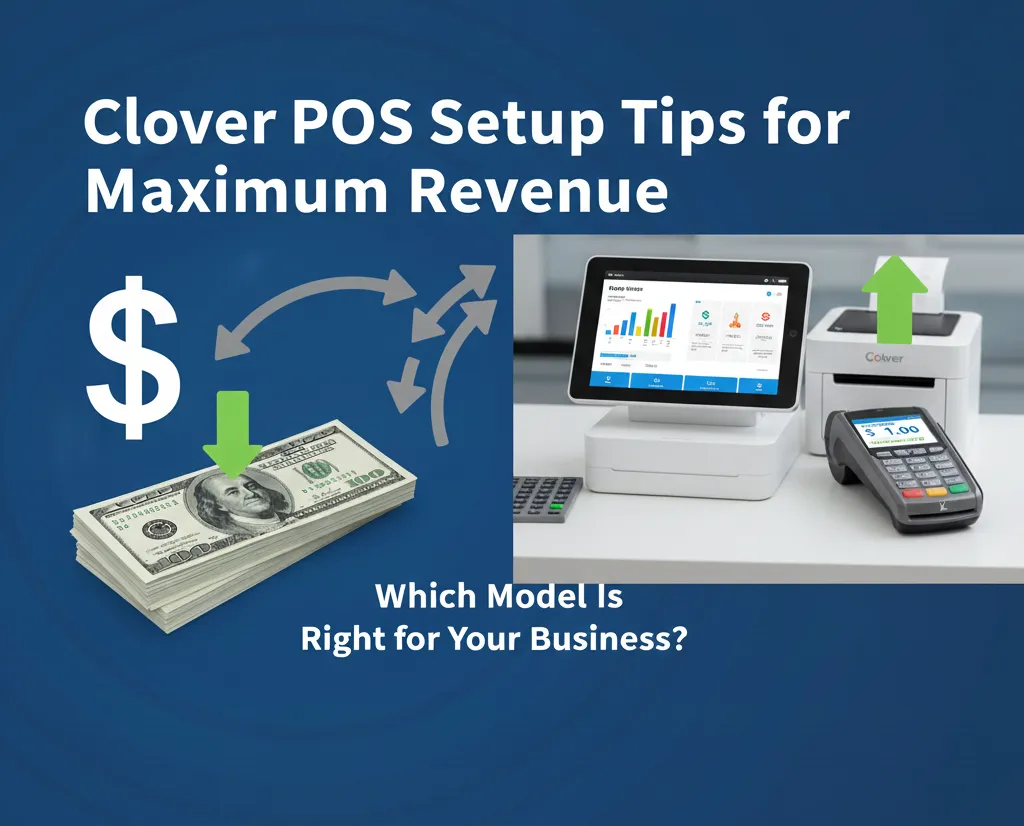
Clover POS Setup Tips for Maximum Revenue | Expert Merchant Guide
Clover is one of the most powerful POS platforms on the market, but only when it’s set up correctly. Too many merchants plug it in, run a few transactions, and assume they’re getting the full value. In reality, small configuration mistakes in a Clover POS setup can quietly cost you revenue, slow down checkout, and limit growth.
This guide breaks down Clover POS setup tips that come from real merchant environments, not generic manuals. Whether you run a retail store, restaurant, or service-based business, optimizing your Clover system can directly impact sales, efficiency, and customer experience.
Why Clover POS Setup Matters More Than Most Merchants Realize?
Clover isn’t just a payment terminal; it’s an operating system for your business. Your pricing rules, tax logic, inventory flow, employee permissions, and reporting all live inside the setup.
When Clover is rushed or misconfigured, businesses often experience:
Incorrect tax calculations
Lost inventory tracking
Slow checkout times
Inaccurate reports
Higher processing costs
A proper setup aligns Clover with how your business actually runs.
How to Optimize Clover POS for Daily Operations?
One of the first optimization steps is tailoring the home screen layout. Buttons should reflect your most common transactions, not default settings. For retail merchants, grouping products by category reduces checkout time. For service businesses, clearly labeled services prevent staff errors.
Employee permissions are another overlooked area. Staff should only access the features they need. Restricting refunds, discounts, and voids protects revenue and reduces internal loss while still keeping operations smooth.
Best Clover POS Settings for Retail Businesses
Retail merchants benefit most from advanced inventory controls. Clover allows item variants, modifiers, and low-stock alerts, but only if they’re configured properly. When inventory is synced with sales data, reorder decisions become data-driven instead of guesswork.
Pricing rules are equally important. Many retailers forget to configure tax-inclusive or tax-exclusive pricing correctly, which can lead to margin issues or customer confusion. Clover supports flexible tax logic that should reflect local and state requirements precisely.
Using Clover Reporting to Increase Revenue
Clover’s reporting tools are powerful but often underused. When reports are set up correctly, merchants can see:
Best-selling products
Peak sales hours
Employee performance
Payment method trends
These insights help adjust staffing, pricing, and promotions. A properly optimized Clover POS becomes a decision-making tool, not just a register.
Common Clover POS Setup Mistakes to Avoid
One major mistake is skipping app integration. Clover’s app marketplace includes tools for loyalty programs, online ordering, scheduling, and marketing. Choosing the right apps and avoiding unnecessary ones can improve customer retention without cluttering the system.
Another common issue is ignoring receipt customization. Branded receipts with contact details, return policies, and promotions subtly reinforce trust and repeat business.
How Expert Clover POS Setup Improves Customer Experience?
Speed matters. A well-optimized Clover setup reduces taps, minimizes errors, and shortens checkout lines. Customers notice when transactions are smooth. That experience translates into repeat visits and higher average ticket sizes.
This is where real-world setup experience matters. Every business uses Clover differently, and cookie-cutter configurations rarely deliver maximum results.
When to Seek Professional Clover POS Setup Help?
If your Clover system feels slow, confusing, or underutilized, it’s likely a setup issue, not a platform limitation. Expert configuration ensures your POS matches your workflow, compliance needs, and revenue goals.
Professionals don’t just install Clover, they optimize it around your business model.
Final Thoughts
The right Clover POS setup tips can turn your system from a basic payment tool into a revenue-driving engine. Small adjustments in configuration can lead to faster checkouts, better insights, and stronger profitability.
If you want your Clover POS working at its full potential, a professional setup review can uncover opportunities you didn’t know you were missing and help your business grow with confidence.
Frequently Asked Questions
How do I optimize Clover POS?
Start by customizing menus, permissions, inventory, and reports to match your daily operations.
What are the best Clover settings for retail?
Inventory tracking, tax rules, employee controls, and reporting should be configured specifically for retail workflows.

Why Circle Processing?
Frequently Asked Questions
Clear answers to help you make confident financial decisions.
Q: What is the main difference between Dual Pricing, Cash Discount, and Surcharging?
The main difference is how the price is presented to the customer. Dual Pricing shows two prices upfront (e.g., $10 cash / $10.40 card). A Cash Discount shows one higher price and automatically applies a discount if the customer pays with cash. Surcharging shows one price and adds a fee at the end only for credit card transactions. Our experts can help you choose the best fit for your business.
Q: Are these fee-elimination programs legal?
Yes. Cash Discount and Dual Pricing programs are legal in all 50 states when implemented correctly with transparent signage, which we provide. Credit card surcharging is also legal in most states, but is prohibited in a few, such as Connecticut and Massachusetts. We are compliance experts and will ensure your business always operates within the rules.
Q: Which Clover device is right for my business?
It depends on your needs. The Clover Station Duo is perfect for high-volume countertops with its dual screens. The Clover Flex is a powerful handheld device ideal for restaurants and mobile payments. The Clover Mini is a compact, all-in-one solution for smaller spaces. We can help you select the perfect hardware during your free consultation.
Q: What makes Circle Processing different from other Clover resellers?
Our focus is on being your profitability partner, not just a hardware vendor. Our core expertise is in the complex, compliant implementation of fee-elimination programs. We combine that with transparent pricing, no long-term contracts, and dedicated, 24/7 U.S.-based support to help your business thrive.

Get Started
Want to work with us?
Let’s create a personalized financial plan that puts your goals within reach — starting today.
COMPANY
LEGAL
SOCIALS
Copyright 2026. Circle Processing. All Rights Reserved.