Our Blogs
Explore articles, tips, and strategies to help you make confident money decisions at every stage of life.

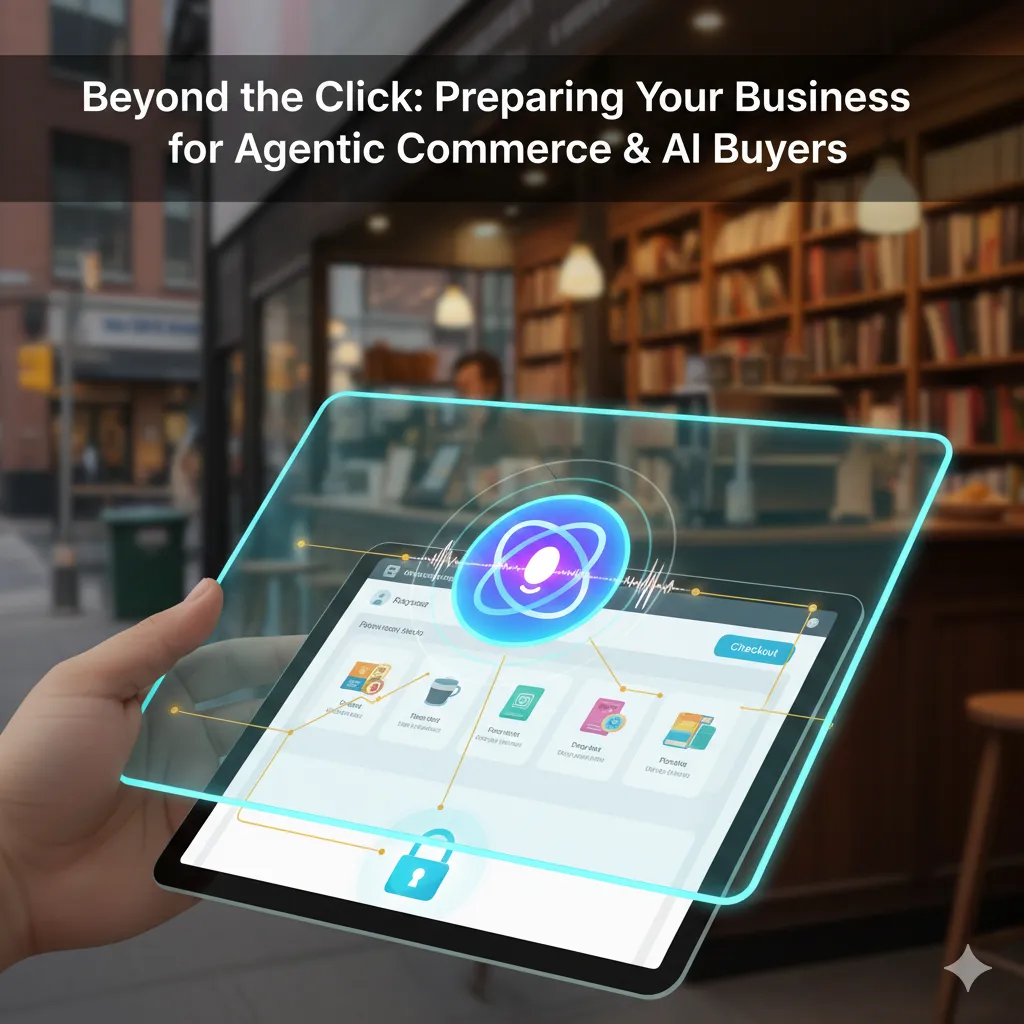
Agentic Commerce: Is Your Business AI-Ready? | Circle Processing
Remember when "online shopping" meant sitting at a desktop, clicking through categories, and typing in your credit card details? Or even more recently, asking Siri to "buy milk" and getting directed to a grocery app? Well, as we sprint through 2026, even that is becoming old news. We are rapidly entering the era of agentic commerce, and it's going to fundamentally change how your customers, or rather, their AI assistants, interact with your business.
I spend a lot of time thinking about the future of payments, and what’s emerging is a world where AI doesn't just help people shop; it does the shopping for them. Imagine your customer telling their smart home assistant, "Order my usual coffee beans from the local roaster," or "Find a unique birthday gift for Aunt Susan that ships within two days and is under $50." Their AI agent then navigates, negotiates, and completes the purchase on its own.
At Circle Processing, we’re not just talking about the future; we’re building the infrastructure for it. If your payment gateway isn't "AI-ready," you risk being completely invisible to this new wave of digital consumers.
What Exactly is Agentic Commerce?
Agentic commerce is the next evolution of e-commerce, driven by advanced artificial intelligence. Instead of humans directly interacting with websites or apps for every step of a purchase, sophisticated AI agents are given a goal (e.g., "buy my groceries," "book a flight"), and then they autonomously execute the entire transaction.
This isn't just about voice commands; it's about AI making independent decisions based on your preferences, budget, loyalty programs, and even real-time availability. These "AI shoppers" will:
Discover Products: Proactively find items that match complex criteria across multiple vendors.
Compare Prices & Features: Analyze hundreds of options and suggest the best value.
Negotiate (Potentially): Interact with pricing algorithms for optimal deals.
Manage Logistics: Handle shipping, delivery, and even returns.
Complete Payments: Execute the transaction seamlessly, often without human input.
For a small business in New York, this means your storefront or e-commerce site isn't just interacting with people anymore, it’s interacting with other AIs.
Why Your Current Payment Gateway Might Be an Obstacle?
Most traditional payment gateways are designed for human interaction. They look for specific clicks, typed information, and sometimes even CAPTCHA tests. An AI agent, however, operates differently. If your system isn't optimized for machine-to-machine communication, you could face several problems:
Friction for AI Agents: Complex checkout flows, mandatory human-verification steps, or outdated API connections can deter an AI agent, causing it to bypass your business for a more "AI-friendly" competitor.
Lost Discovery: If your product data isn't structured in a way that AI can easily "read" and understand (e.g., clear, precise descriptions, up-to-date inventory), you won't even appear in the AI's search results.
Security Gaps: AI-driven purchases require a new level of fraud detection that can differentiate between a deepfake voice authorization and a genuine AI-initiated transaction. Our Circle Processing Tech is evolving to meet these challenges.
Preparing Your Business for the AI Shopping Revolution
The good news is that preparing for agentic commerce doesn't require rebuilding your entire business overnight. It starts with your payment infrastructure. Here's what we focus on:
API Integration: Ensure your payment gateway has robust, well-documented APIs that allow seamless, secure, and automated interaction with third-party AI agents.
Data Cleanliness: Provide clear, structured product data (SKUs, descriptions, availability, pricing) that AI can easily parse. Think of it as speaking "AI language."
Advanced Fraud Detection: Implement AI-powered fraud tools that can detect anomalies in payment patterns characteristic of synthetic identities or deepfake transactions, which are becoming more prevalent in 2026.
Omnichannel Harmony: Whether the AI agent is shopping online, via voice, or initiating a pickup from your physical store, the payment experience needs to be consistent and seamless.
FAQs
What is the difference between conversational commerce and agentic commerce?
Conversational commerce (like ordering via Alexa) requires a human to initiate and guide the conversation for a purchase. Agentic commerce involves an AI agent autonomously making decisions and completing purchases on behalf of a user, often with minimal human oversight.
When will agentic commerce become mainstream for small businesses?
While the technology is emerging now in 2026, widespread adoption for complex purchases might take another 3-5 years. However, simple, recurring purchases are already being handled by AI agents, and businesses need to prepare their payment gateways now to stay competitive.
Will AI shoppers eliminate the need for human customer service?
No, AI shoppers will likely free up human customer service representatives to handle more complex or empathetic interactions. Basic order tracking, FAQs, and routine purchases will be automated, allowing your team to focus on high-value customer relationships.
What kind of products will AI agents buy first?
Initially, AI agents will likely handle routine, low-consideration purchases like groceries, recurring subscriptions, office supplies, and household essentials. As the technology evolves, they will move into more complex, personalized purchases.
How does Circle Processing Tech help businesses prepare for AI shoppers?
Our payment gateway is built with robust APIs designed for machine-to-machine communication, includes advanced AI-driven fraud detection to secure automated transactions, and provides detailed analytics to help you optimize your product data for AI discovery.
Embrace the Future, Don't Be Left Behind
The shift to agentic commerce is not a distant future; it's happening now. Businesses that embrace this change will unlock new revenue streams and dramatically increase efficiency. Those who don't risk becoming obsolete.
Would you like me to provide a free "AI Readiness Assessment" for your current payment infrastructure to ensure your business isn't just surviving, but thriving in the new era of agentic commerce?

Why Circle Processing?
Frequently Asked Questions
Clear answers to help you make confident financial decisions.
Q: What is the main difference between Dual Pricing, Cash Discount, and Surcharging?
The main difference is how the price is presented to the customer. Dual Pricing shows two prices upfront (e.g., $10 cash / $10.40 card). A Cash Discount shows one higher price and automatically applies a discount if the customer pays with cash. Surcharging shows one price and adds a fee at the end only for credit card transactions. Our experts can help you choose the best fit for your business.
Q: Are these fee-elimination programs legal?
Yes. Cash Discount and Dual Pricing programs are legal in all 50 states when implemented correctly with transparent signage, which we provide. Credit card surcharging is also legal in most states, but is prohibited in a few, such as Connecticut and Massachusetts. We are compliance experts and will ensure your business always operates within the rules.
Q: Which Clover device is right for my business?
It depends on your needs. The Clover Station Duo is perfect for high-volume countertops with its dual screens. The Clover Flex is a powerful handheld device ideal for restaurants and mobile payments. The Clover Mini is a compact, all-in-one solution for smaller spaces. We can help you select the perfect hardware during your free consultation.
Q: What makes Circle Processing different from other Clover resellers?
Our focus is on being your profitability partner, not just a hardware vendor. Our core expertise is in the complex, compliant implementation of fee-elimination programs. We combine that with transparent pricing, no long-term contracts, and dedicated, 24/7 U.S.-based support to help your business thrive.

Get Started
Want to work with us?
Let’s create a personalized financial plan that puts your goals within reach — starting today.
COMPANY
LEGAL
SOCIALS
Copyright 2026. Circle Processing. All Rights Reserved.