Our Blogs
Explore articles, tips, and strategies to help you make confident money decisions at every stage of life.

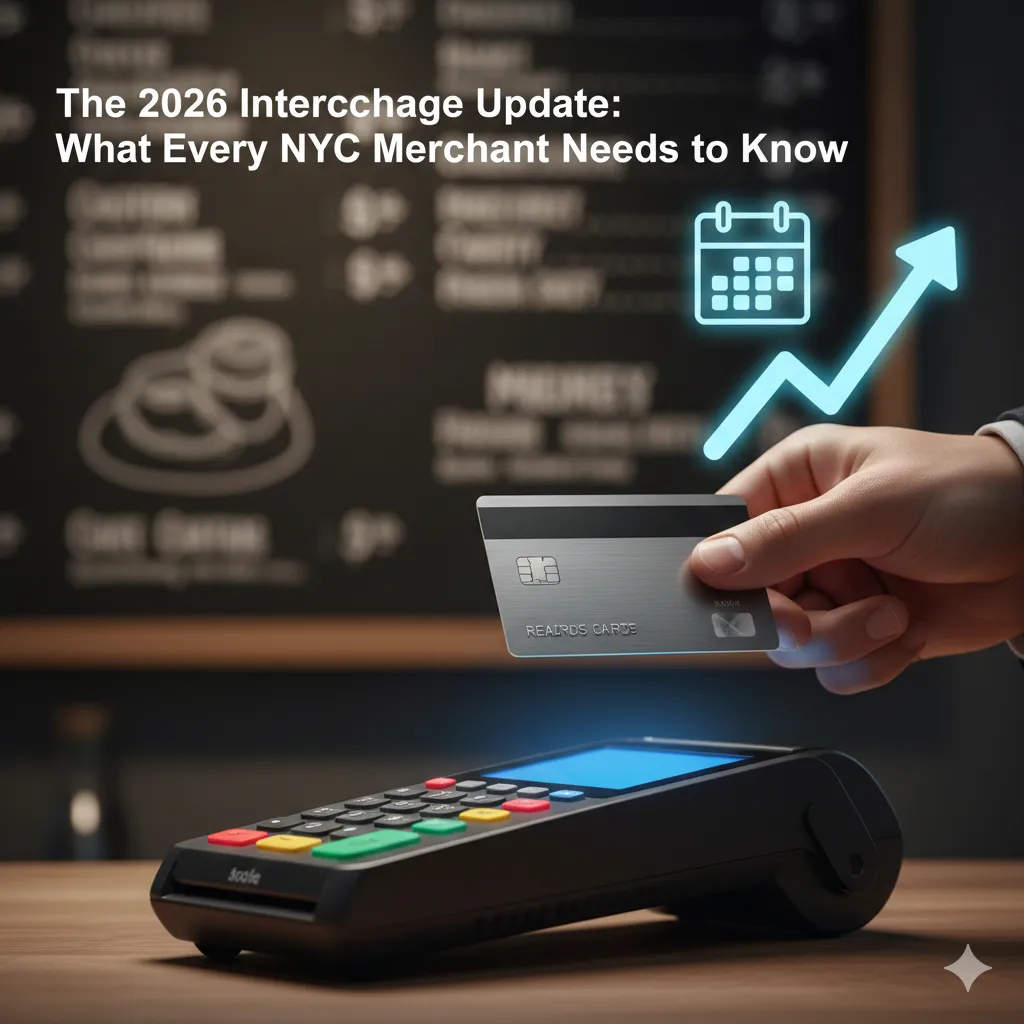
2026 Merchant Guide: Navigating Visa & Mastercard Interchange Hikes
I was talking to a long-time client last week—a shop owner in Manhattan who has survived everything from the 2008 crash to the 2020 lockdowns. He looked at his latest merchant statement, scratched his head, and said, "My sales were flat this month, so why did my fees go up by three hundred dollars?"
He isn't alone. As we navigate 2026, the landscape of credit card processing NY businesses rely on has shifted again. While the headlines often focus on major legal settlements and "caps" on fees, the reality hitting your bank account is far more complex. We are seeing a new wave of "hidden" merchant costs that stem from a massive overhaul in how Visa and Mastercard categorize transactions.
If you feel like you’re paying more to get paid, you’re right. And it isn't just inflation—it’s the math behind the swipe.
The 2026 Paradox: Lower Caps, Higher Costs?
You might have heard about the major 2025/2026 settlement that promised to "lower" interchange rates. On paper, it sounds great: a small reduction in the weighted average of fees and a cap on standard consumer cards at around 1.25%.
However, there is a catch that most processors aren't mentioning in their sales pitches. These caps largely apply to "standard" cards—the basic ones without bells and whistles. But in 2026, those cards will become extinct. Banks are heavily pushing "Infinite," "World Elite," and high-tier rewards cards. These premium cards are not subject to the same caps, and their interchange fees for 2026 rates are actually climbing to fund the travel perks and cash-back rewards consumers now demand.
As a merchant, your "card mix" is likely skewing toward these expensive premium cards, which explains why your effective rate is rising even if the "base" rate looks lower on the news.
The "Junk Data" Penalty: Visa’s New CEDP Rules
One of the biggest changes I’ve had to help my clients navigate this year is the sunsetting of "Level 2" data discounts. As of April 2026, Visa has moved toward a much stricter Commercial Enhanced Data Program (CEDP).
Essentially, if your point-of-sale system isn't sending "clean" and highly detailed data—things like sales tax amounts or customer codes—you are being hit with what many in the industry are calling a "punitive" rate increase. In some cases, we are seeing interchange hikes of 65 to 75 basis points just because a merchant’s software is out of date.
This is the "hidden" cost that blindsides people. You haven't changed how you do business, but because the card networks changed their data requirements, your merchant costs have spiked.
Strategic Survival in the New Fee Landscape
So, how do you fight back? In my experience at Circle Processing, the solution isn't just "finding a lower rate"—because everyone is dealing with the same underlying interchange hikes. The solution is optimization and transparency.
First, you need to know your "Card Mix." If 80% of your customers are using high-fee rewards cards, no amount of negotiation on the "processor markup" will save you. This is why many of my New York clients are moving toward the Cash Discount models we’ve discussed previously.
Second, check your technology. If you are still using a terminal from five years ago, you are likely failing the new data "integrity tests" set by the networks, which means you’re paying the highest possible rates by default. Upgrading to a system that automatically handles Level 3 data or CEDP requirements can often save more than a direct rate negotiation ever could.
FAQs
Why did my credit card processing fees go up in 2026?
Several factors are driving the increase, including new Visa and Mastercard interchange updates, a higher percentage of customers using "premium" rewards cards that carry higher fees, and stricter data requirements (like CEDP) that penalize merchants with older technology.
What are the new Visa and Mastercard interchange fees for 2026?
While some standard consumer cards are capped at 1.25% due to recent settlements, premium rewards cards and commercial cards remain uncapped and often range between 2.10% and 3.00% or more. Additionally, international settlement fees and authorization misuse fees have seen increases in early 2026.
What is the Credit Card Competition Act of 2026?
The CCCA is bipartisan legislation aimed at reducing swipe fees by requiring large banks to offer at least two different networks (e.g., Visa plus a smaller competitor) for routing transactions, theoretically driving down costs through increased competition.
How can I lower my merchant costs in NYC?
To lower costs, you should audit your current "card mix" to see which cards are costing you the most, ensure your equipment is sending the required Level 2/3 data to qualify for lower rates, or consider a Cash Discount Program to pass the cost of processing to the consumer.
Is it true that Visa is getting rid of Level 2 data discounts?
Yes, Visa is transitioning away from traditional Level 2 data in favor of the Commercial Enhanced Data Program (CEDP). By April 2026, merchants who do not provide "verified" enhanced data will see significant increases in their interchange rates for business and corporate cards.
Don't Let Your Margin Evaporate
The complexity of the payment world in 2026 can be overwhelming, but you don't have to navigate it alone. Understanding these hikes is the first step toward taking control of your bottom line.
Would you like me to perform a "Data Integrity Audit" on your current processing setup to see if you are being overcharged simply because your system isn't sending the right data to the card networks?

Why Circle Processing?
Frequently Asked Questions
Clear answers to help you make confident financial decisions.
Q: What is the main difference between Dual Pricing, Cash Discount, and Surcharging?
The main difference is how the price is presented to the customer. Dual Pricing shows two prices upfront (e.g., $10 cash / $10.40 card). A Cash Discount shows one higher price and automatically applies a discount if the customer pays with cash. Surcharging shows one price and adds a fee at the end only for credit card transactions. Our experts can help you choose the best fit for your business.
Q: Are these fee-elimination programs legal?
Yes. Cash Discount and Dual Pricing programs are legal in all 50 states when implemented correctly with transparent signage, which we provide. Credit card surcharging is also legal in most states, but is prohibited in a few, such as Connecticut and Massachusetts. We are compliance experts and will ensure your business always operates within the rules.
Q: Which Clover device is right for my business?
It depends on your needs. The Clover Station Duo is perfect for high-volume countertops with its dual screens. The Clover Flex is a powerful handheld device ideal for restaurants and mobile payments. The Clover Mini is a compact, all-in-one solution for smaller spaces. We can help you select the perfect hardware during your free consultation.
Q: What makes Circle Processing different from other Clover resellers?
Our focus is on being your profitability partner, not just a hardware vendor. Our core expertise is in the complex, compliant implementation of fee-elimination programs. We combine that with transparent pricing, no long-term contracts, and dedicated, 24/7 U.S.-based support to help your business thrive.

Get Started
Want to work with us?
Let’s create a personalized financial plan that puts your goals within reach — starting today.
COMPANY
LEGAL
SOCIALS
Copyright 2026. Circle Processing. All Rights Reserved.