POS Upgrade vs. Anchor: Stop Losing 15% in Sales | Circle Processing
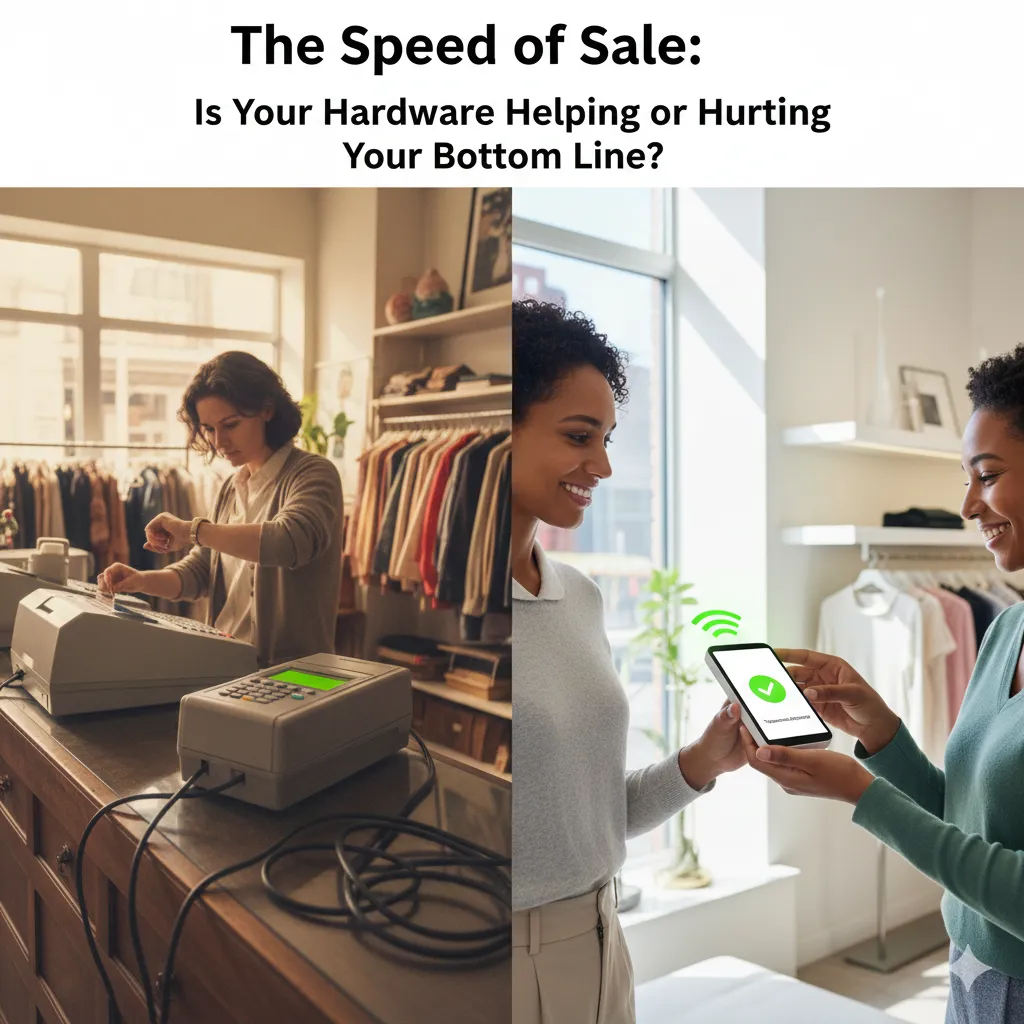
I was recently visiting a beautiful boutique in Huntington. The inventory was curated, the lighting was perfect, and the owner was clearly passionate. But then, I watched the "Five-Minute Frown" happen. A customer walked up to the counter with three items, ready to spend. The owner reached for an old, clunky grey terminal—the kind that still relies on a finicky dial-up connection or a sluggish, outdated Wi-Fi chip.
The terminal lagged. The "Handshake" took forever. The customer’s smile faded. They looked at their watch, then at the door, and finally said, "You know what? I’m actually in a rush, I’ll come back another time."
They didn’t come back. That is the reality of 2026: your POS system is either an engine for growth or an anchor dragging down your success. At Circle Processing, we’ve found that businesses clinging to "legacy" hardware are losing an average of 15% in potential sales due to cart abandonment and slow checkout lines. In a world where consumers are used to one-click ordering, a slow terminal isn't just a minor inconvenience, it's a dealbreaker.
The Psychology of the Long Island Checkout
Whether you're running a cafe in Montauk or a gift shop in Garden City, your customers value their time as much as their money. When a line starts to snake toward the back of the store, a psychological "exit trigger" flips in a shopper's brain.
If they see a clerk struggling with a terminal that needs to be rebooted or a non-responsive screen, the perceived value of your product drops. They start to wonder if the "hassle" is worth the purchase. Modern fast checkout tech isn't just about processing a card; it's about maintaining the emotional high of a purchase right through the moment the customer walks out the door.
Clover vs. Circle: Why "One Size Fits All" Fails
Many business owners get stuck in the Clover vs. Circle debate. They see the sleek Clover hardware in a neighbor’s shop and assume it’s the universal fix. And while Clover makes beautiful equipment, the "secret sauce" isn't just the hardware, it's the processing ecosystem behind it.
A standard "out of the box" system often comes with rigid, expensive processing rates and generic software that doesn't account for the specific needs of a Long Island business. When we implement POS systems that Long Island owners actually love, we focus on integration. We don't just give you a screen; we give you a system that talks to your inventory, manages your staff’s tips, and, most importantly, processes a transaction in under two seconds.
The Hidden Costs of the "Ancient" Terminal
If you think you're "saving money" by not upgrading your $300 terminal, consider these three invisible leaks in your bucket:
The Reboot Penalty: If your system crashes once a day during a lunch rush, that 10-minute downtime can cost you hundreds in lost throughput.
The "No Tap" Loss: In 2026, mobile wallets and wearables will be the standard. If your terminal forces a "chip dip" or—heaven forbid—a swipe because the NFC reader is broken, you are adding friction to the sale.
The Integration Gap: Old terminals don't tell you when you're low on your best-selling candle or which server is turning tables the fastest. That lack of data is a missed opportunity for profit.
FAQs
How much does a slow POS system cost a small business?
Industry data for 2026 suggests that businesses with slow checkout processes see an average of 10% to 15% in lost revenue. This is due to "walk-aways" (customers leaving the line) and a decrease in repeat visits from customers who found the previous experience frustrating.
What are the best POS systems for Long Island retail stores?
The best systems are those that combine reliable hardware (like Clover or specialized handhelds) with localized support. Circle Processing specializes in tailoring these systems to the unique traffic patterns and seasonal needs of Long Island merchants.
What is the difference between a simple credit card terminal and a full POS system?
A credit card terminal only handles the payment transaction. A full POS (Point of Sale) system manages your entire business, including inventory tracking, employee timesheets, customer loyalty programs, and detailed sales analytics.
How does fast checkout tech improve customer loyalty?
Fast checkout reduces "purchase regret" and ensures the final interaction with your brand is positive. When a customer knows they can get in and out quickly, they are much more likely to choose your store over a competitor with long, slow lines.
Is it expensive to upgrade to a modern POS system in 2026?
While there is an initial hardware cost, many modern providers offer flexible financing or "hardware-as-a-service" models. More importantly, the increase in transaction speed and reclaimed "lost sales" typically pays for the upgrade within the first few months.
Turn Your Counter Into a Profit Center
The days of the clunky, corded terminal are over. Your checkout should be as seamless as your service.
Would you like me to bring a modern, high-speed handheld demo to your shop this week so you can see exactly how much faster your checkout could be compared to your current setup?
